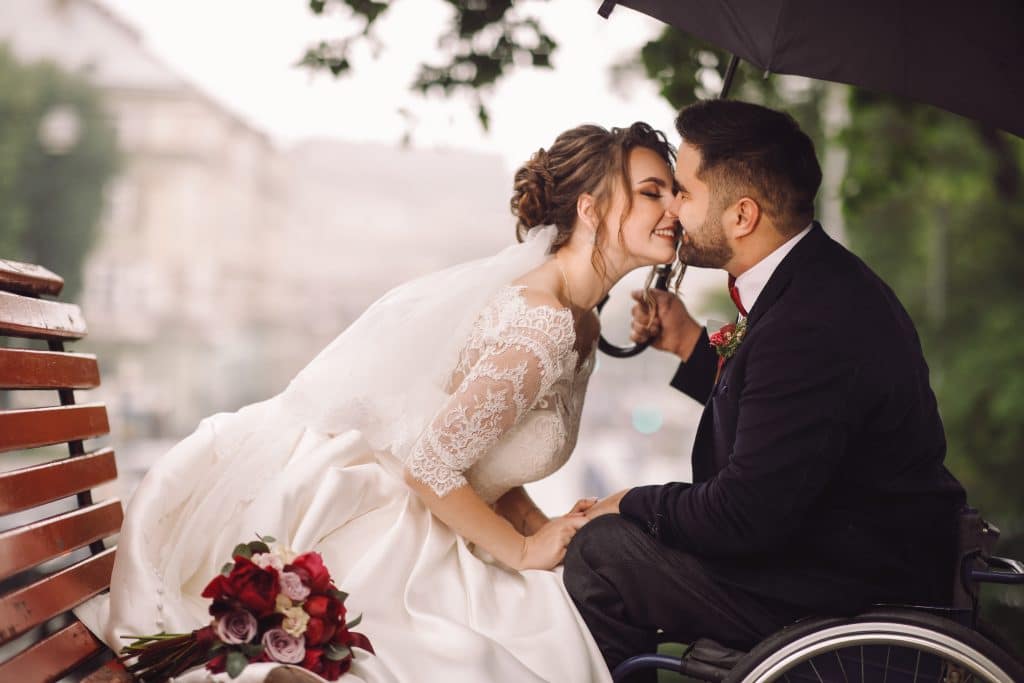
Because inclusivity is important to me it’s been at the front of my mind throughout the development of my business so the first thing I prepared for my business was my inclusivity statement which is:
I want to work with you!
I respect and want to work with people of all races, orientations, genders, ages, sizes, identities, lifestyles, cultures, differences and disabilities (whether visible or invisible). I will always try my hardest to be kind, considerate and inclusive. I can’t wait to meet you x
Breaking some of that down, let’s talk about disability.
Some folks prefer the term differences. I get that, and in lots of cases, it’s a better term. Especially where people have physical differences but are cognitively able, it’s a more fair description.
Visible or physical disabilities
Differences or disabilities can be either visible or hidden. Visible differences can be obvious or comparatively subtle. If, for example, you have limited mobility, I will work with you to ensure that we consider the physical aspects of your ceremony so that you can enjoy the day without worrying about mobility. Maybe you would rather be in place before your guests sit down so you don’t have to worry about walking down an aisle in front of people? Maybe you need to sit down through your ceremony? That’s fine – we’ll discuss how you want to arrange chairs for you and your partner, and whether you want me to be seated too. Maybe you want to walk into the ceremony, but it’s going to take you a while. It’s your day! Take all the time you need!
Some disabilities throw up specific issues for wedding. Rings are a common symbol of marriage – but what if that doesn’t work for you? We can look at other ways to mark your commitment. Handfasting doesn’t necessarily require hands for example! Or a ring can be worn on a chain as a necklace. We can get creative with ways to celebrate you and your marriage!
What about invisible disabilities?
I have a definite interest here – my oldest son has a complex mix of autistic spectrum disabilities and significant sensory difficulties, but you can’t tell that just by looking at him. Anxiety, depression, fibromyalgia, autism, ME, MS, Crohn’s disease, learning difficulties – there are so very many hidden conditions that can affect people. In fact, even before I had a website or any documentation, I consulted with friends who have dyslexia and other conditions that can make reading tricky on my font choice.
I want to make sure that we remove as many barriers that might reduce your enjoyment of your special day as we possibly can. A celebrant led ceremony doesn’t have rules – we can work together to design a ceremony that fits you.
Do fluorescent lights or certain smells affect you? We can try daylight/candlelight/asking guests to avoid wearing perfume. If you have a particular interest that is extremely important to you, we can incorporate it into your ceremony.
What about if you want to include family and friends but can’t deal with being in a room with lots of people – can we do a live broadcast from nearby? Or have a ceremony outside with an amplifier so guests can be a little further away and nobody feels hemmed in?
If you have vision or hearing impairments, we will consider how to make your ceremony accessible to you and to others who don’t have those impairments.
Would a member of the wedding party like to sign along with my script? Can we use rituals that celebrate other senses like smell, taste or touch so that you and your partner can both share the same experience regardless of any impairment?
All of this goes for your guests too. We can work out how to accomodate everyone so that all your guests have an equivalent experience of the day.
I don’t claim to be an inclusivity expert. There will be things I don’t know. But I promise that I will not judge you or doubt what you tell me will work for you. I will work with you to get around any obstacles to you being able to relax and enjoy yourself. You are the expert on you!
Leave a Reply